
Call Samaritans 116 123
Text SHOUT to 85258
Please use the numbers above for urgent support.
Football & Sport-Based Groups.
Sometimes, sitting across from someone in a quiet room and talking about your feelings is the hardest thing in the world. As men, we often find it much easier to open up when we are standing shoulder-to-shoulder, focused on a shared task or physical activity. Sport-based support groups combine the physical release of exercise with a safe, zero-pressure environment to chat with other blokes who simply get it.
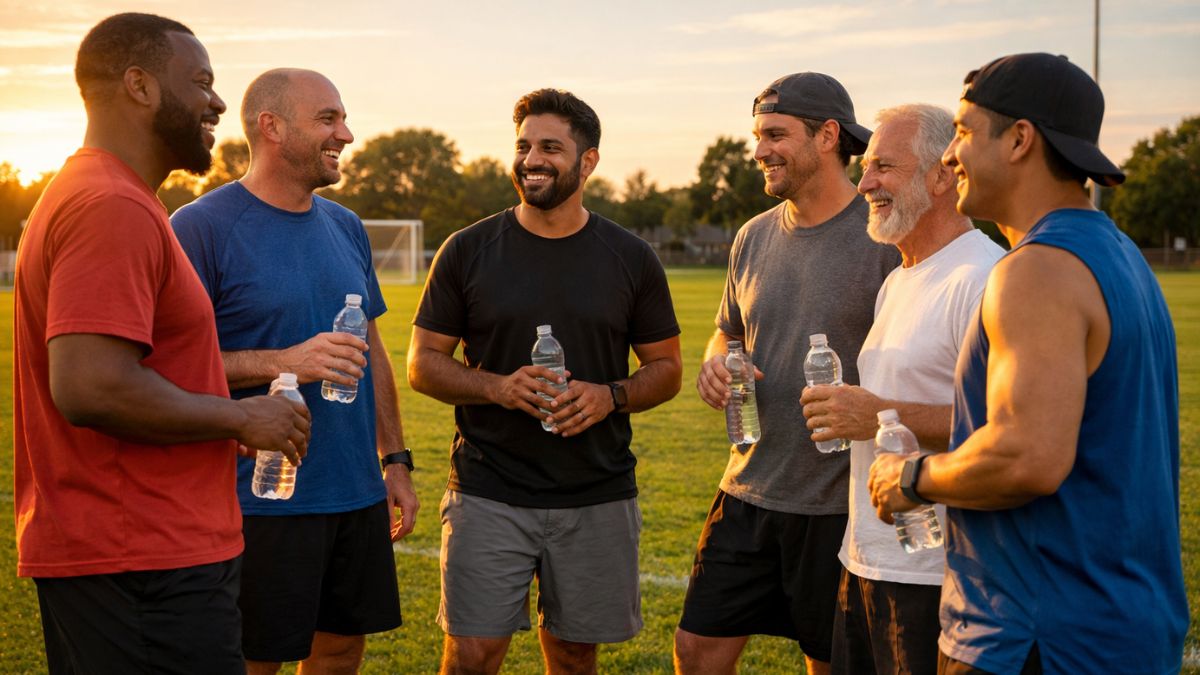
Why Sport Works for Men.
The Shoulder-to-Shoulder Connection
There is a unique kind of magic that happens on a pitch, a court, or a running trail. The pressure to maintain eye contact or find the "right" words completely drops away. You are focused on the ball, your breathing, or the game, which lowers your mental defences.
When the pressure is off, the conversations flow more naturally. You might start by talking about the weekend's fixtures, but by the end of the session, you are sharing the struggles you've been having at work or home. It’s a stealthy, highly effective way to process stress without feeling like you are in a clinical setting.
Signs You Might Benefit from a Group.
You don't need to be in a full-blown crisis to join a sport-based mental health group. Often, it is the slow, quiet build-up of daily pressures that signals it is time to find a new outlet.
Physical Signs
- Restless, pent-up energy that makes it hard to relax in the evenings.
- A general sense of lethargy or sluggishness from being stuck indoors.
- Tension in your shoulders, jaw, or chest from carrying unspoken stress.
- Poor sleep quality because your mind won't switch off.
Emotional Signs
- Feeling isolated, even when you are surrounded by family or colleagues.
- Missing the banter and camaraderie you used to have with mates.
- Finding yourself quick to anger or snapping over minor inconveniences.
- Lacking the motivation to get out of the house and do something for yourself.

Ready for a Kickabout?
Join a community of men who use sport to stay physically and mentally fit. Find a local group near you today.
Find a Local Group →
More Than Just Football.
A Pitch for Everyone
When we say "sport-based," a lot of blokes immediately picture highly competitive, Sunday league football where you get shouted at for missing a pass. That isn't what these groups are about. These sessions are built entirely around inclusivity, participation, and mental wellbeing.
If football isn't your thing, there are walking groups, boxing fitness classes, rugby meetups, and cycling clubs. Furthermore, your current fitness level absolutely does not matter. Whether you haven't run for a bus in ten years or you are a regular gym-goer, the only requirement is showing up and being willing to take part.
The Ripple Effect on Your Life.
Getting your heart rate up releases endorphins, which are your body's natural stress relievers. But the benefits of these groups spill over long after the final whistle blows. When you have a dedicated time each week to burn off frustration and chat with mates, you return to your daily life feeling more grounded.
You might notice you have more patience with your kids, a clearer head at work, and a generally lighter mood. It breaks the cycle of isolation. Knowing you have a squad of lads in your corner who have your back makes the heavy weeks much easier to navigate.


Building Your New Team.
The greatest victory in these groups has nothing to do with the scoreline. It is the moment you realise you are not the only one carrying a heavy load. Hearing another bloke say, "Yeah mate, I've been feeling exactly the same way," is incredibly powerful.
These groups rebuild the village that many modern men have lost. Friendships are forged in the mud, the sweat, and the shared laughs. You are building a support network that will catch you when you stumble, both on and off the pitch.
Taking the First Step.
Making the decision to turn up to that first session is always the hardest part. The voice in your head might tell you that you aren't fit enough, or that it will be awkward. Push past it.
Football & Sport-Based Support Groups: Frequently Asked Questions
Not sure what to expect from a sport-based support group?
If you're curious how football and sport-led mental health groups work, this FAQ section answers some common questions. Learn how these groups combine activity with connection, and what to expect when you get involved.
Visit the main groups page to explore more support options across the UK.
Common Questions About Football & Sport-Based Groups
What is a sport-based support group?
These are informal groups where men come together to connect through sport or physical activity — such as football, walking rugby, or other team sessions. They're not therapy sessions, but offer a relaxed way to improve well-being through movement and shared experience.
Do I have to be good at sport?
Not at all. Most groups welcome all fitness levels and focus more on participation and connection than performance. It’s about being part of something — not how fast you run or how many goals you score.
Are sport-based groups the same as therapy?
No, these groups are not run by clinicians or therapists. They’re peer-led or community-run and built on shared activity and informal conversation. They can be a helpful complement to other forms of support.
Is it free to join?
Many football and sport-based groups are free. Some may ask for a small donation or charge a minimal fee to cover equipment or venue hire. Check the group’s website or social media for details.
What if I’m unfit or haven’t played in years?
That’s totally fine — lots of men join after time away from exercise. Most groups are inclusive and welcome those getting back into movement at their own pace. Some offer low-impact or walking-based formats.
How do I know if a group is right for me?
Each group has its own vibe and setup. You can try different ones to see what suits you best. If you're unsure, contact the organisers — they’re usually happy to answer questions before you come along.
What if I feel awkward showing up alone?
You won’t be the only one. Many men attend solo, especially at first. Most groups are used to new faces and will do their best to make you feel welcome. Just turning up is already a win.