
Call Samaritans 116 123
Text SHOUT to 85258
Please use the numbers above for urgent support.
Walk and Talk Support Groups.
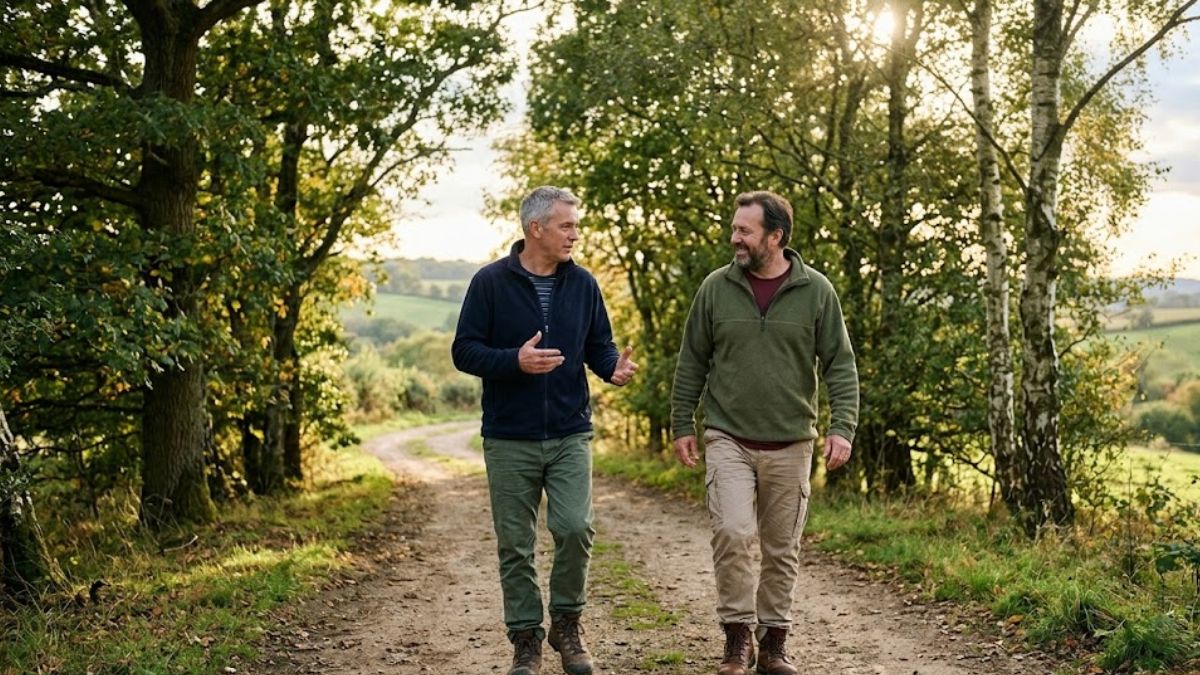
Sitting opposite someone in a clinical room and talking about your feelings can feel like an interrogation. Walking side-by-side takes all that pressure off, letting the conversation flow naturally while you get some fresh air in your lungs. Walk and talk groups are a brilliant, low-stakes way to clear your head and connect with other men who simply get it.
Why Walking Works for Men.
The Side-by-Side Connection
Eye contact can be incredibly intimidating when you are trying to untangle complicated thoughts. When you are walking next to someone, looking ahead at the path or the scenery, those defensive walls naturally drop. The physical rhythm of walking actually helps your brain process stress and formulate what you want to say.
There is no awkward silence when you are hiking up a hill or navigating a muddy woodland trail. You can just talk about the weather, the route, or the football until you feel ready to open up about the heavier stuff. It is a completely natural way to build trust.
Signs You Need to Get Out.
Modern life has a habit of boxing us in, moving us directly from the house to the car to the workplace. Recognising when this physical stagnation is impacting your mental health is the first step.
Physical Signs
- Feeling stiff, sluggish, and generally lethargic from sitting too much.
- Experiencing shallow breathing or a tight chest when stuck indoors all day.
- A build-up of restless energy that makes it impossible to relax on the sofa.
- Struggling to sleep soundly because your body hasn't burned off any energy.
Emotional Signs
- Feeling trapped, suffocated, or uninspired by your daily routine.
- A foggy, cluttered mind that makes it incredibly hard to focus on simple tasks.
- Feeling isolated, even if you are surrounded by colleagues or family members.
- Snapping easily at minor inconveniences due to pent-up, unspoken stress.
Need to Clear Your Head?
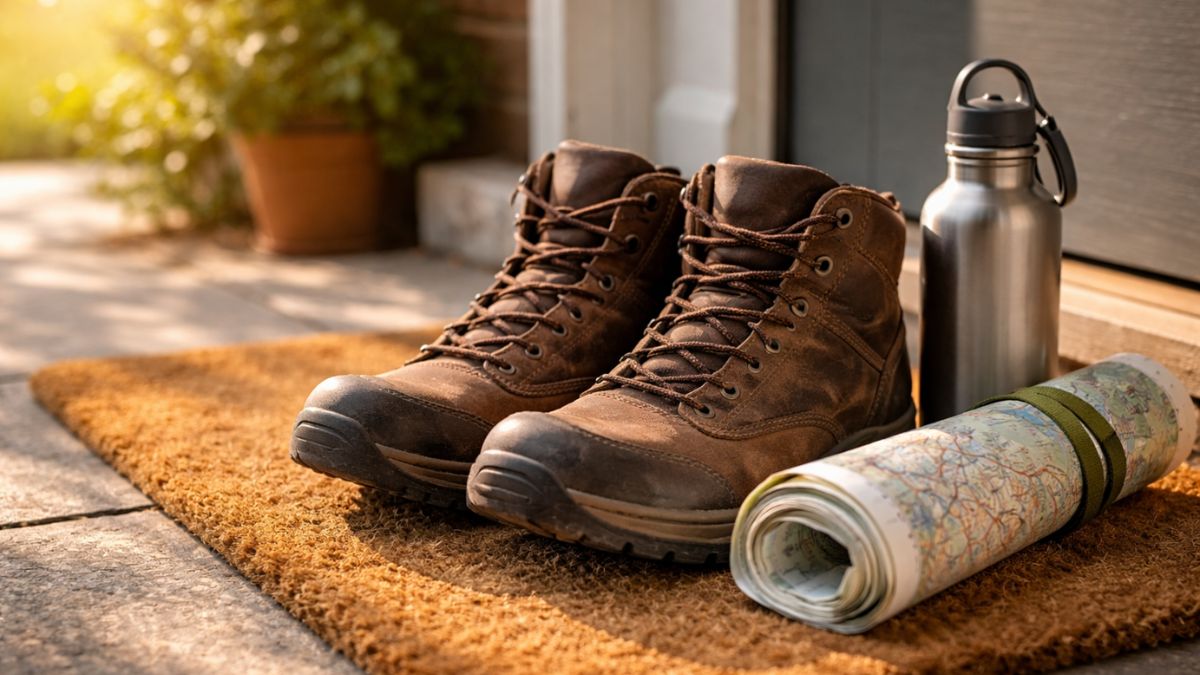
Join a community of men stepping outside to walk, talk, and support each other. Find a walk happening near you.
Find a Local Group →
What Actually Happens on a Walk.
Pace Over Pressure
A common worry is that these groups are competitive route marches or elite hiking expeditions. In reality, the pace is always dictated by the slowest man, ensuring nobody gets left behind or feels out of breath trying to keep up. Whether it is a flat stroll around a local park or a gentle trek in the hills, the focus is entirely on the chat, not the cardio.
You aren't forced into deep, emotional conversations the second you put your boots on, either. Many men turn up just for the company and a change of scenery. You are more than welcome to simply listen to the other lads until you feel comfortable sharing your own load.
Clearing the Mental Fog.
Combining gentle physical movement with the great outdoors is a proven way to lower cortisol, your body's main stress hormone. The fresh air, natural light, and green spaces act as a powerful reset button for a busy, overwhelmed brain.
After a couple of miles and a good chat, problems that felt completely insurmountable in the morning often seem much more manageable. You return home with a clearer head, a bit of mud on your boots, and a significantly lighter emotional load to carry.

Finding Your Stride.
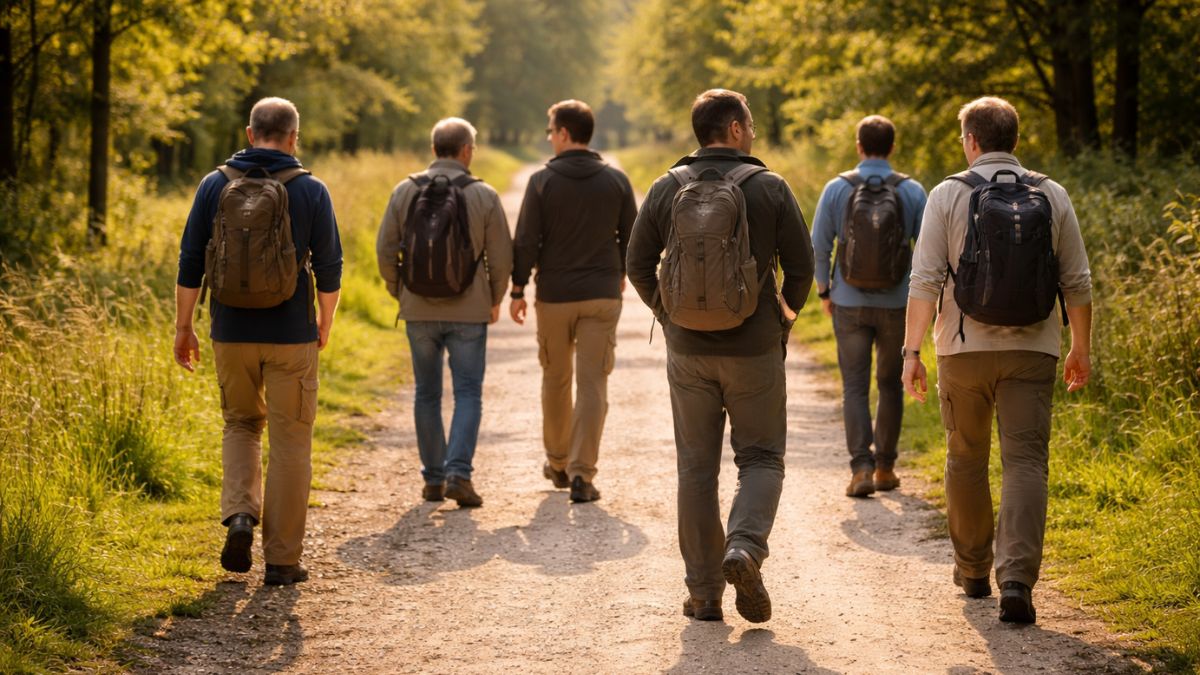
The best thing about walk and talk groups is how quickly a bunch of strangers can turn into a solid, reliable support network. You are all literally moving in the exact same direction, putting one foot in front of the other together.
This simple, shared activity builds lasting friendships based on genuine honesty. You will quickly find that knowing you have a regular walk scheduled with a solid group of lads gives you a dependable anchor to get you through the rest of the week.
Lacing Up for the First Time.
Turning up to the meeting point for the very first time takes a bit of bottle. It is completely normal to feel apprehensive about walking into the unknown with men you haven't met yet.
Walk and Talk Support Groups: Frequently Asked Questions
Wondering what to expect from a walk and talk group?
If you’re new to men’s walking support groups, this FAQ section answers some common questions. Learn how these groups work, what makes them unique, and how to find one that suits your pace — literally and emotionally.
Visit the main groups page to explore more support options across the UK.
Common Questions About Walk and Talk Groups
What is a walk and talk support group?
Walk and talk groups are informal meet-ups where men walk together and talk as much or as little as they like. These groups are not therapy sessions — they’re relaxed, peer-led opportunities to connect outdoors in a friendly, pressure-free setting.
Do I have to talk, or can I just walk?
There’s no pressure to speak. You’re welcome to walk, listen, or just enjoy being around others. Many men attend for the routine and company alone — sharing is entirely up to you.
Are walk and talk groups the same as therapy?
No. These are not run by professionals or clinicians. They’re informal spaces built around shared experiences, not formal mental health treatment — though many find them a helpful step toward feeling better.
Is it free to attend?
Most walk and talk groups are free. Some may suggest a small donation to help cover refreshments or running costs, but it’s usually optional.
What happens if the weather is bad?
This varies by group. Some cancel in bad weather, while others walk regardless. It's best to check with the group’s website or social media for updates before attending.
How do I know if a group is right for me?
Each group has its own feel. You can try different ones to see what suits you. Most are happy to answer questions beforehand — just reach out to the organiser directly.
What if I feel awkward showing up alone?
You won’t be the only one. Many men arrive solo, especially the first time. Groups are used to newcomers and will do their best to make you feel welcome — just turning up is a big first step.
Still unsure? That’s okay.
Explore walk and talk groups near you — a simple step outside could be the start of something positive. You don’t have to face things alone.